
 TWITTER

When Things Were Rotten
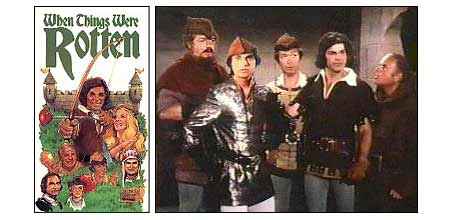
Synopsis of TV Show
“Once upon a time when things were rotten,
Not just food, but also kings were rotten…”
Young funnymen-in-training in the mid-70’s knew there were four magic words that made anything a must-see: “A Mel Brooks spoof.” After busting a gut through Young Frankenstein and Blazing Saddles in 1974, we knew that the Mel Brooks name was a mark of comic gold. Thus, it was with no small amount of expectant glee that Brooks fans tuned in for ABC’s When Things Were Rotten, a spoof of the Robin Hood legend brought to us by Brooks and co-creators Norman Stiles and John Boni.
In Brooks’ skewed view of English history, Prince John was still a corrupt tyrant, but Robin Hood and his band of Merry Men were no honored citizens either. Robin wasn’t so much evil as he was less-than-bright and weighed down by a tremendous ego. The Merry Men—Friar Tuck, Alan-a-Dale, Little John and Renaldo (who had a decidedly un-merry twin brother named Bertram)—were classic doofuses, though they did have the good sense to dress up as a conga band to spring Robin from jail in the series opener.
Like most Mel Brooks comedies, When Things Were Rotten was more than willing to trade historical accuracy for a good laugh. Whether it was Prince John’s plan to turn Sherwood Forest into a housing development, a nearly-forced marriage between Maid Marian and a Sheik olive oil baron, or the aforementioned conga band, the show frequently tried to work contemporary comedy into its Crusades-era setting.
Unfortunately, there weren’t enough young funnymen-in-training to keep When Things Were Rotten on the air for more than a few months. The show was a critical favorite, but low ratings meant early cancellation. Brooks fans had to be content to follow their parody guru back to the silver screen, where the writer/director/actor eventually refurbished his TV project as the 1993 feature Robin Hood: Men in Tights.
“So when other legends are forgotten,
We’ll remember back when things were rotten,
Yay for Robin Hood!”
Release History of Prime Time Show
9/10/75 - 12/24/75 ABCTV Sub Categories
comedyTelevision Network
ABCTelevision Studio
Paramount TelevisionTV Cast
Robin Hood Richard GautierFriar Tuck Dick Van Patten
Alan-a-Dale Bernie Kopell
Renaldo Richard Dimitri
Bertram Richard Dimitri
Sheriff of Nottingham Henry Polic II
Maid Marian Misty Rowe
Little John David Sabin
Prince John Ron Rifkin
Princess Isabelle Jane A. Johnston